> ## Documentation Index
> Fetch the complete documentation index at: https://docs.cxp.crescendo.ai/llms.txt
> Use this file to discover all available pages before exploring further.
# Knowledge Base management
> Create, import, edit, publish, archive, organize, and test Knowledge Base documents in CXP.
# Knowledge Base management
Use Knowledge in CXP to maintain the source material that your customer experience workflows can retrieve. Each Knowledge Base has its own documents, settings, and retrieval preview.
**Coming soon:** Both Knowledge reading and management in CXP are Owner/Admin-only. Legacy-app Knowledge permissions remain unchanged.
## Prerequisites
You need a role with Knowledge management access to create, edit, publish, archive, or unarchive documents.
## Open a Knowledge Base
1. In the main navigation, open **Agents > Knowledge**.
2. Select a Knowledge Base, or select **Create New** to create one.
3. Enter a clear name and description so other administrators understand its purpose.
The directory shows the number of available Knowledge Bases and the latest projected update for each one. Search updates the count to show how many entries match.
The workspace opens to **Documents**. Use **Metadata** to review how documents are categorized, **Jobs** to import related folders as a durable batch, and **Settings** to update identity, tags, data sources, and web-source configuration.
## Review Knowledge metadata
Open **Metadata** for a read-only overview of the values currently applied to documents. The overview groups publication status, validation issues, editors, split modes, tags, and structured retrieval values such as audience, product, region, topic, language, document type, authority, and content roles.
Edit an individual document when you need to change its structured retrieval values. The Metadata overview summarizes existing document data; it does not create a separate copy.
## Configure data sources
Open **Settings** to edit the Knowledge Base name, description, and available tags. Tenant-enabled connectors and the web source can also be configured there.
Save Settings before selecting **Load Updates** for a connector. **Reload All** reprocesses every document from that source and can replace manual changes to source-managed content, so review its confirmation carefully. Source updates report loaded, updated, deleted, and failed document counts.
## Import a folder with Jobs
Use **Jobs** when you need to import a related folder of PDF, DOCX, Markdown, or text files as one durable batch.
1. Open **Jobs** and keep **Upload Folders** selected, or choose **Use Existing Upload** to reuse a staged folder.
2. Choose a folder and wait until every file is uploaded. Fix or remove any failed file before continuing.
3. Choose whether imported documents should be published, select the processing worker count, and optionally enter shared metadata defaults.
4. Select **Create Import Job**.
5. Wait for discovery to reach **Ready**, review the supported-file count, and select **Start Processing**.
The job continues after you leave the page. Return to **Jobs** to review current state, numeric progress, file-level results, and the downloadable results report. Completed and failed jobs also offer separate actions to delete staged input files or delete the job record. Neither action deletes documents already imported into the Knowledge Base.
Use **Manage Uploads** to remove staged folders that are no longer needed. Upload and job deletion cannot be undone, so verify the folder or job before confirming.
## Manage documents
The Documents directory shows each article's Draft, Published, or Archived status, version, last publication, last update, and editor. Search by title, source, tag, ID, or editor, and use the status and sort controls to narrow the list.
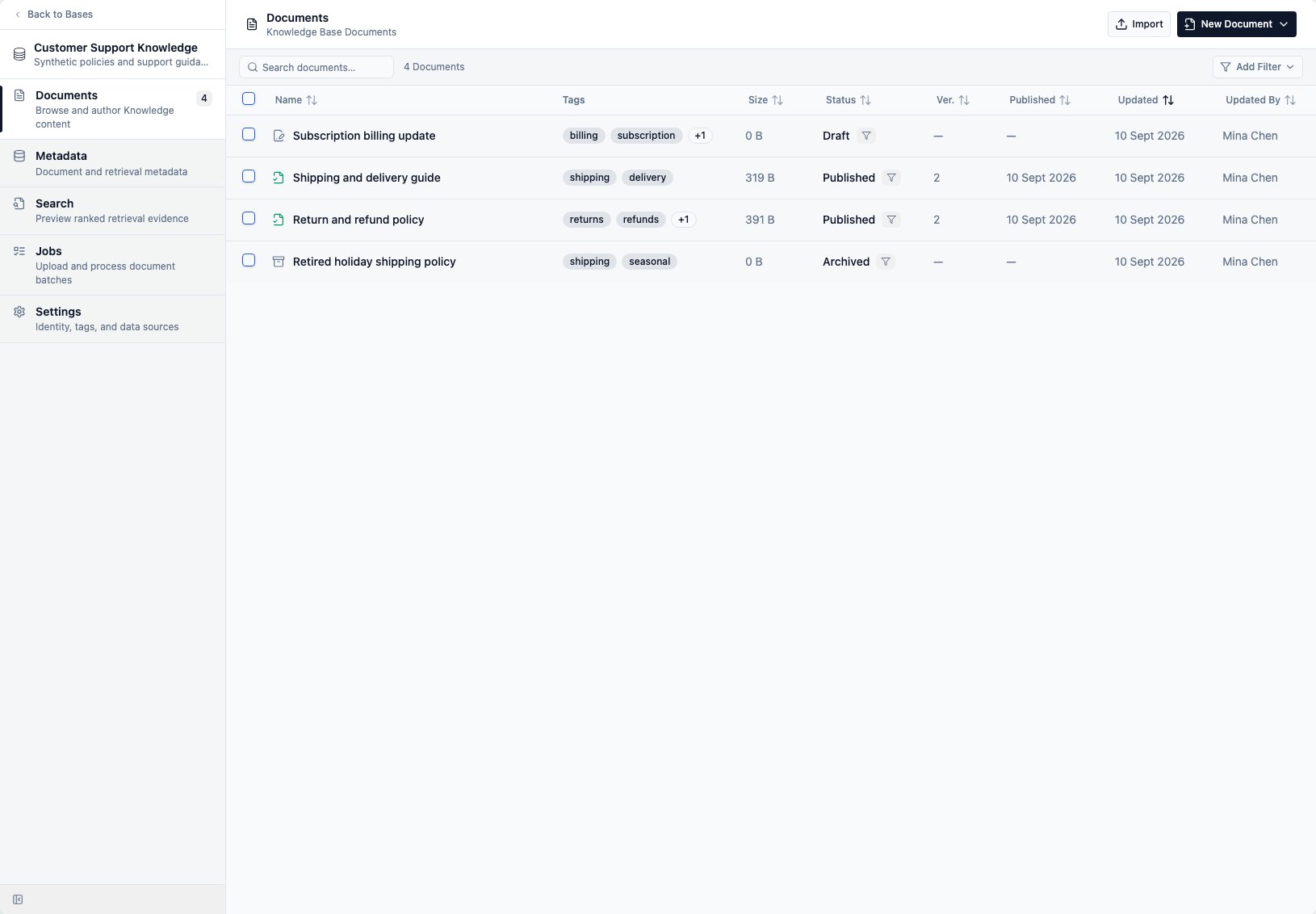 To create content:
* Select **New Document > Blank Markdown draft** to start an article in CXP.
* Select **New Document > Upload and convert** to convert a supported file into a Markdown draft.
* Select **Import** to import a compatible Knowledge export.
Select multiple documents to publish, archive, unarchive, export, or delete them as a group. Review the confirmation carefully before a bulk publish or permanent deletion.
## Archive or unarchive documents
Archive content when it should stop appearing in search but you want to keep its text, metadata, and version history.
1. Select one or more documents in **Documents**, then open the **selected** actions menu and choose **Archive selected**. In an open document, use **More document actions > Archive**.
2. Review the selected documents. You can archive up to 100 at a time.
3. Optionally enter a reason of up to 1,000 characters, then confirm **Archive**.
Archived documents remain in the directory. Choose **Add Filter > Status: Archived** to find them. Open a document to see who archived it, when, and the reason. You can keep editing and saving drafts while it is archived; **Publish** becomes available after you unarchive it. Bulk publishing skips archived documents. If another user archives a document while your Publish confirmation is open, CXP disables the confirmation and explains that you must unarchive first.
To create content:
* Select **New Document > Blank Markdown draft** to start an article in CXP.
* Select **New Document > Upload and convert** to convert a supported file into a Markdown draft.
* Select **Import** to import a compatible Knowledge export.
Select multiple documents to publish, archive, unarchive, export, or delete them as a group. Review the confirmation carefully before a bulk publish or permanent deletion.
## Archive or unarchive documents
Archive content when it should stop appearing in search but you want to keep its text, metadata, and version history.
1. Select one or more documents in **Documents**, then open the **selected** actions menu and choose **Archive selected**. In an open document, use **More document actions > Archive**.
2. Review the selected documents. You can archive up to 100 at a time.
3. Optionally enter a reason of up to 1,000 characters, then confirm **Archive**.
Archived documents remain in the directory. Choose **Add Filter > Status: Archived** to find them. Open a document to see who archived it, when, and the reason. You can keep editing and saving drafts while it is archived; **Publish** becomes available after you unarchive it. Bulk publishing skips archived documents. If another user archives a document while your Publish confirmation is open, CXP disables the confirmation and explains that you must unarchive first.
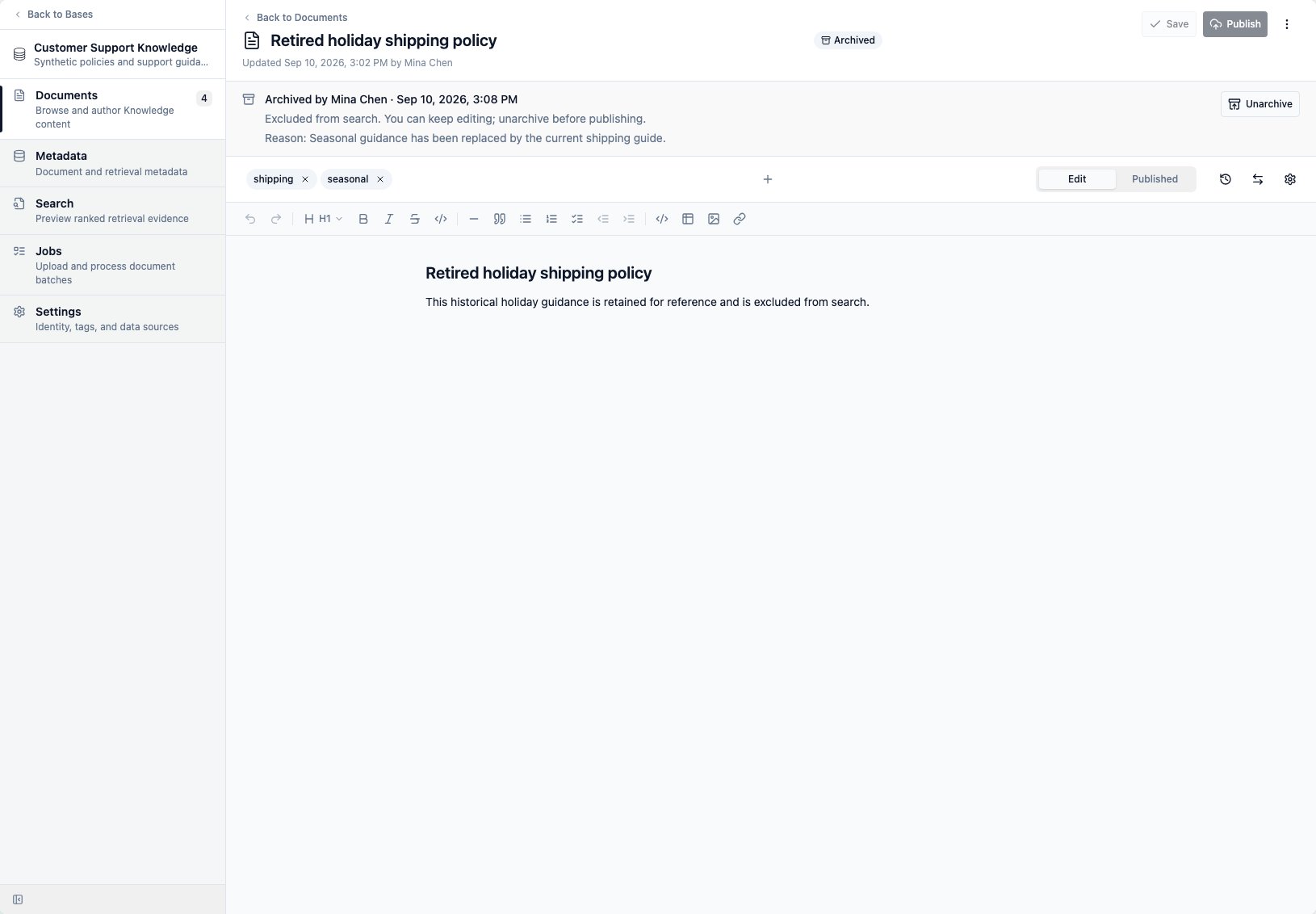 To restore a document, select **Unarchive** in its archive notice or select documents in the directory and choose **Unarchive selected**. Review the confirmation, then select **Unarchive**. This restores normal search availability without publishing unsaved changes.
Bulk results report how many documents changed, were already in the requested state, or failed. Failed documents remain selected, and the confirmation shows each failure. If restoring search fails after the archive state changes, CXP displays that error; check the document and its retrieval results before relying on it.
## Edit and save a draft
1. Open a document from the directory.
2. Edit the article in the visual editor. Its toolbar supports headings, emphasis, links, quotes, horizontal rules, ordered and unordered lists, task lists, indentation, code, tables, and images.
3. When you need to work directly with Markdown or preserve an unsupported construct, open the document actions menu and enable **Edit as Markdown**. You can switch back to the visual editor without discarding supported formatting.
4. Update the title and tags in the document header. Open **Document settings** to update split mode and structured retrieval metadata or review source metadata.
5. Select **Save**.
Use **Insert image** to add a JPEG, PNG, or WebP image up to 10 MB. The image remains part of your unsaved edit until you select **Save**. During Save, the existing Knowledge Base processing stores the image and replaces the embedded data with its durable document URL. Saved images render inline in both **Edit** and **Published** views.
To insert a table, select **Table** and choose its dimensions from the visual grid. Place the cursor inside an existing table to highlight the Table control and open actions for adding or removing rows and columns, or deleting the table. The **Link** control is highlighted while linked text or a linked image is selected; open it to update or remove the destination.
CXP does not overwrite a newer server draft silently. If the draft changed elsewhere, CXP preserves your local work and asks you to compare it with the latest saved draft.
Leaving the page with unsaved changes triggers a warning. Save or copy your work before navigating away.
## Publish a document
Publishing is always a separate action from saving:
1. Save the current draft.
2. Select **Publish**.
3. Optionally enter a version label and release notes. You can also generate release-note suggestions and edit them before publishing.
4. Confirm **Publish**.
After publication, select **Published** to inspect the current live content. Select **Compare Draft with Published** to review server-calculated change totals and a side-by-side line comparison of the last saved Draft. Save local editor changes first so the comparison reflects the latest draft. Use **Version history** to compare other versions, label or pin important versions, or restore an earlier version to a new draft. Restoring does not publish automatically.
## Test retrieval evidence
Open **Search** to test what the Knowledge Base retrieves for a question. You can add tag filters, change the maximum result count, and include keyword evidence.
To restore a document, select **Unarchive** in its archive notice or select documents in the directory and choose **Unarchive selected**. Review the confirmation, then select **Unarchive**. This restores normal search availability without publishing unsaved changes.
Bulk results report how many documents changed, were already in the requested state, or failed. Failed documents remain selected, and the confirmation shows each failure. If restoring search fails after the archive state changes, CXP displays that error; check the document and its retrieval results before relying on it.
## Edit and save a draft
1. Open a document from the directory.
2. Edit the article in the visual editor. Its toolbar supports headings, emphasis, links, quotes, horizontal rules, ordered and unordered lists, task lists, indentation, code, tables, and images.
3. When you need to work directly with Markdown or preserve an unsupported construct, open the document actions menu and enable **Edit as Markdown**. You can switch back to the visual editor without discarding supported formatting.
4. Update the title and tags in the document header. Open **Document settings** to update split mode and structured retrieval metadata or review source metadata.
5. Select **Save**.
Use **Insert image** to add a JPEG, PNG, or WebP image up to 10 MB. The image remains part of your unsaved edit until you select **Save**. During Save, the existing Knowledge Base processing stores the image and replaces the embedded data with its durable document URL. Saved images render inline in both **Edit** and **Published** views.
To insert a table, select **Table** and choose its dimensions from the visual grid. Place the cursor inside an existing table to highlight the Table control and open actions for adding or removing rows and columns, or deleting the table. The **Link** control is highlighted while linked text or a linked image is selected; open it to update or remove the destination.
CXP does not overwrite a newer server draft silently. If the draft changed elsewhere, CXP preserves your local work and asks you to compare it with the latest saved draft.
Leaving the page with unsaved changes triggers a warning. Save or copy your work before navigating away.
## Publish a document
Publishing is always a separate action from saving:
1. Save the current draft.
2. Select **Publish**.
3. Optionally enter a version label and release notes. You can also generate release-note suggestions and edit them before publishing.
4. Confirm **Publish**.
After publication, select **Published** to inspect the current live content. Select **Compare Draft with Published** to review server-calculated change totals and a side-by-side line comparison of the last saved Draft. Save local editor changes first so the comparison reflects the latest draft. Use **Version history** to compare other versions, label or pin important versions, or restore an earlier version to a new draft. Restoring does not publish automatically.
## Test retrieval evidence
Open **Search** to test what the Knowledge Base retrieves for a question. You can add tag filters, change the maximum result count, and include keyword evidence.
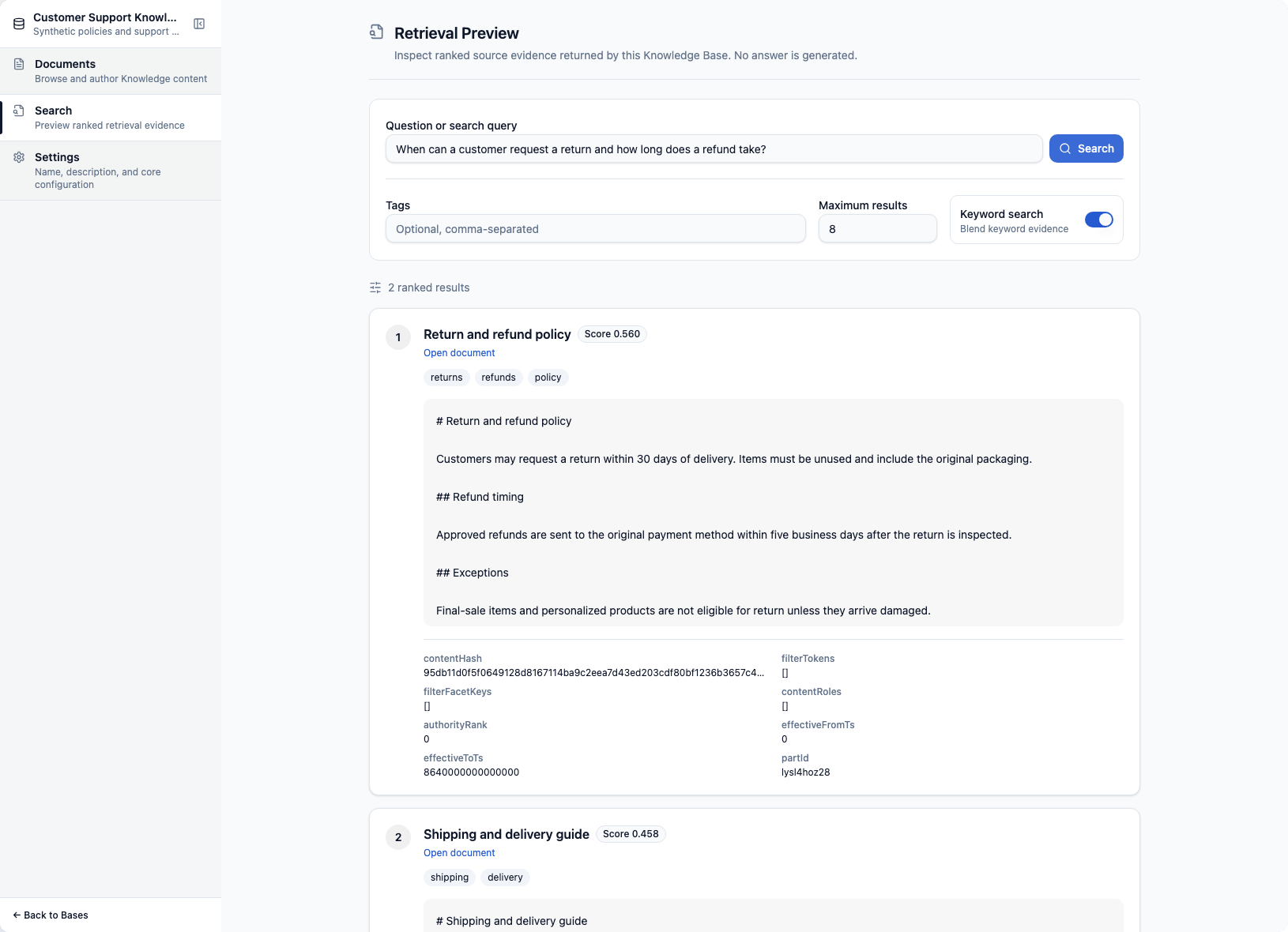 The preview shows the exact ranked passages, scores, links, and metadata returned by search. It does not generate an answer. Use it to confirm that the expected source material is discoverable before relying on it elsewhere.
## Recommended publishing checklist
Before publishing, confirm that:
* The title clearly describes the customer question or policy.
* The draft is accurate, current, and safe for customer-facing use.
* Tags and structured metadata match the intended audience, product, region, topic, and language.
* The rendered preview has no broken formatting or unsafe links.
* Retrieval Preview returns the expected passage for representative questions.
* Release notes describe the meaningful change.
## Use knowledge in analytics — Coming soon
Applied Insights will support exploring KB evidence and refreshing selected
knowledge in widgets, using existing Insights access and sharing rules. See
[Knowledge in Applied Insights](../capabilities/knowledge-in-applied-insights)
for prerequisites, policy-comparison prompts and result limits.
The preview shows the exact ranked passages, scores, links, and metadata returned by search. It does not generate an answer. Use it to confirm that the expected source material is discoverable before relying on it elsewhere.
## Recommended publishing checklist
Before publishing, confirm that:
* The title clearly describes the customer question or policy.
* The draft is accurate, current, and safe for customer-facing use.
* Tags and structured metadata match the intended audience, product, region, topic, and language.
* The rendered preview has no broken formatting or unsafe links.
* Retrieval Preview returns the expected passage for representative questions.
* Release notes describe the meaningful change.
## Use knowledge in analytics — Coming soon
Applied Insights will support exploring KB evidence and refreshing selected
knowledge in widgets, using existing Insights access and sharing rules. See
[Knowledge in Applied Insights](../capabilities/knowledge-in-applied-insights)
for prerequisites, policy-comparison prompts and result limits.