

Coming soon. This article describes the shared Search and Views experience
awaiting release. Production availability has not yet been confirmed.
Choose the right kind of View
You need permission to read conversations to use Views. Creating or changing personal Views requires personal-view management permission; managing shared Views requires the corresponding administrator permissions. User and Viewer can read existing permitted Views but cannot create, edit, delete, or save their personal order. See Roles and permissions.
Available Live Conversations has a separate live-work workflow. It does not
use the configurable Search/View editor described here.
Open and use a View
- Open Conversations and select the Views tab.
- Choose a View in the left panel. Its name and saved count help you find the queue; hover over its entry for the description.
- Review the populated filters. The table opens with that View’s saved columns and sort order.
- Open a conversation row to work on it. Select a Contact pill to open the contact, or expand a row’s summary to read more.
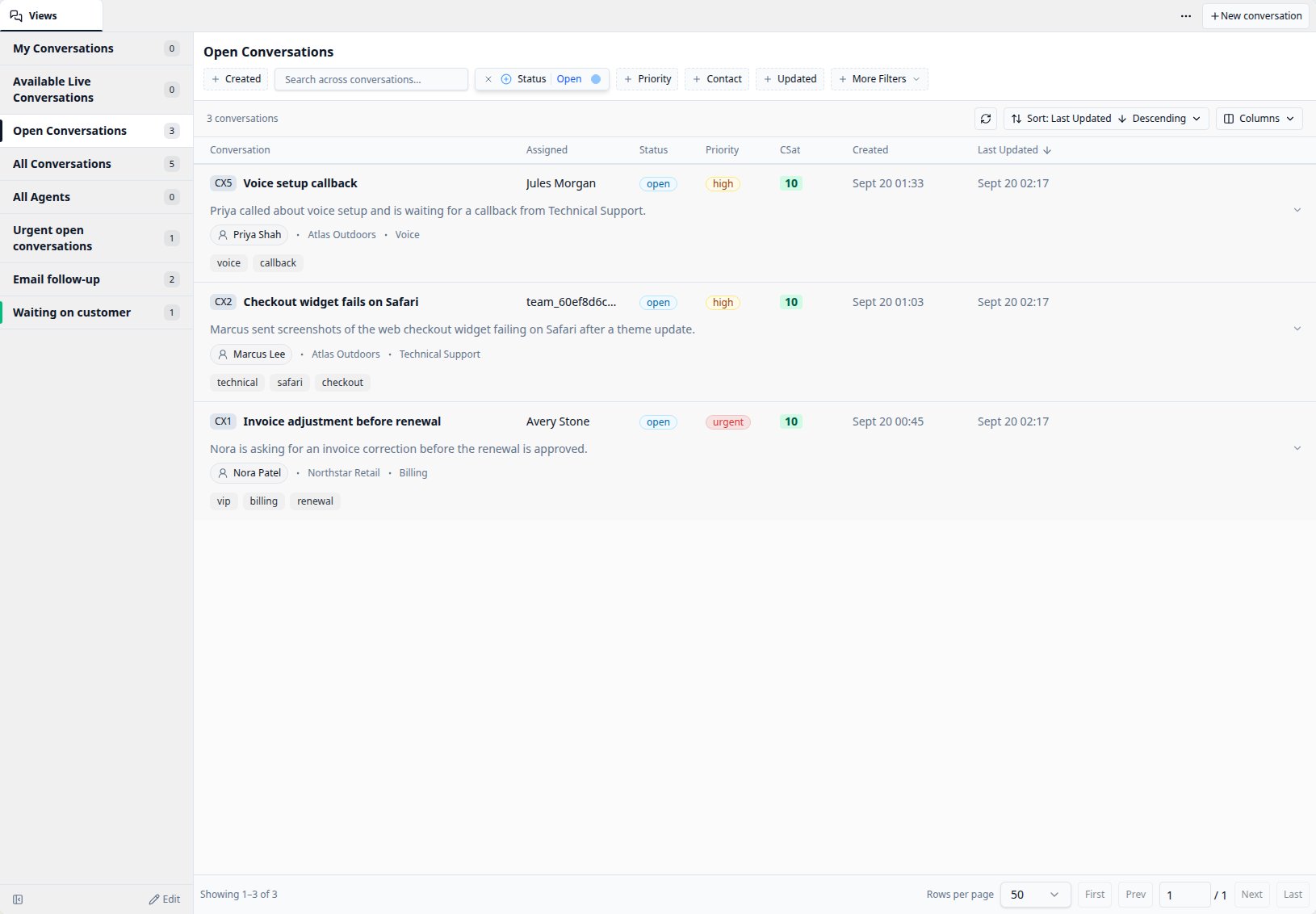
An opened View shows its criteria and matching conversations beside the Views list.
Refine your session or save a change
Changing filters, sort, or columns marks the opened View Modified. These changes affect your current View session. Other Views and Search keep their own settings.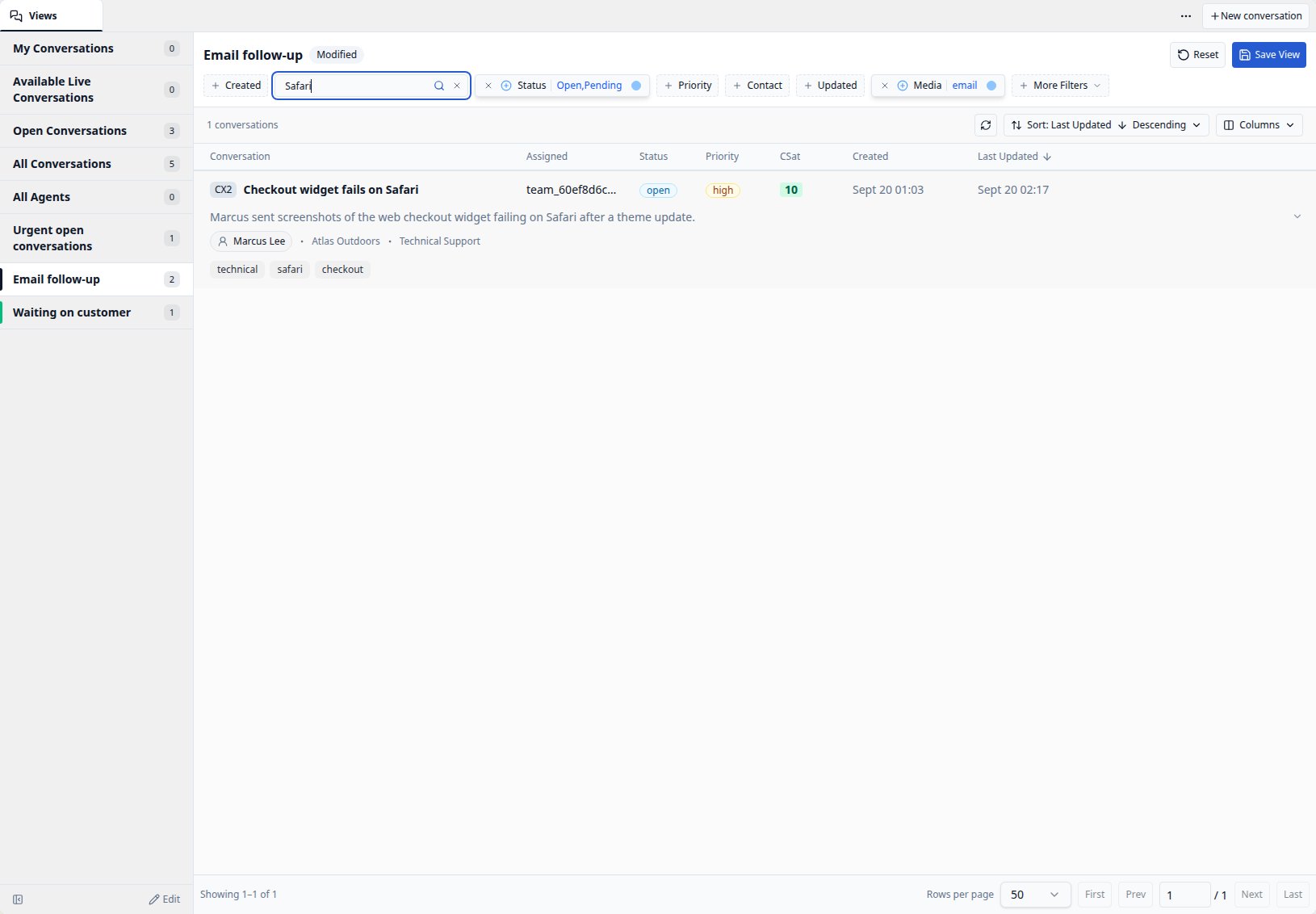
A modified shared View offers Reset and, for an authorized editor, Save View.
The count beside a View in the left panel describes its saved criteria. The
count above the table describes your current, possibly modified criteria.
Use the table’s Refresh icon to reload results and update relative date ranges.
The description/Apply request box is available in the View definition editor.
When using an opened View, refine it with the visible controls.
Create a View
Choose the starting point that suits your work:- From Search: configure the results, select Save as View, enter a name, and Save. This creates a personal View with the current filters, sort, columns, and prompt text as its description.
- From Conversations: select Edit at the bottom of the Views panel, then Add view to open the personal View creation dialog.
- From My Profile → Views: select Add view, or use an existing View’s pencil action to edit your personal definition.
- From Settings → Views: authorized administrators can add or edit configured Views and choose Personal or Shared scope.
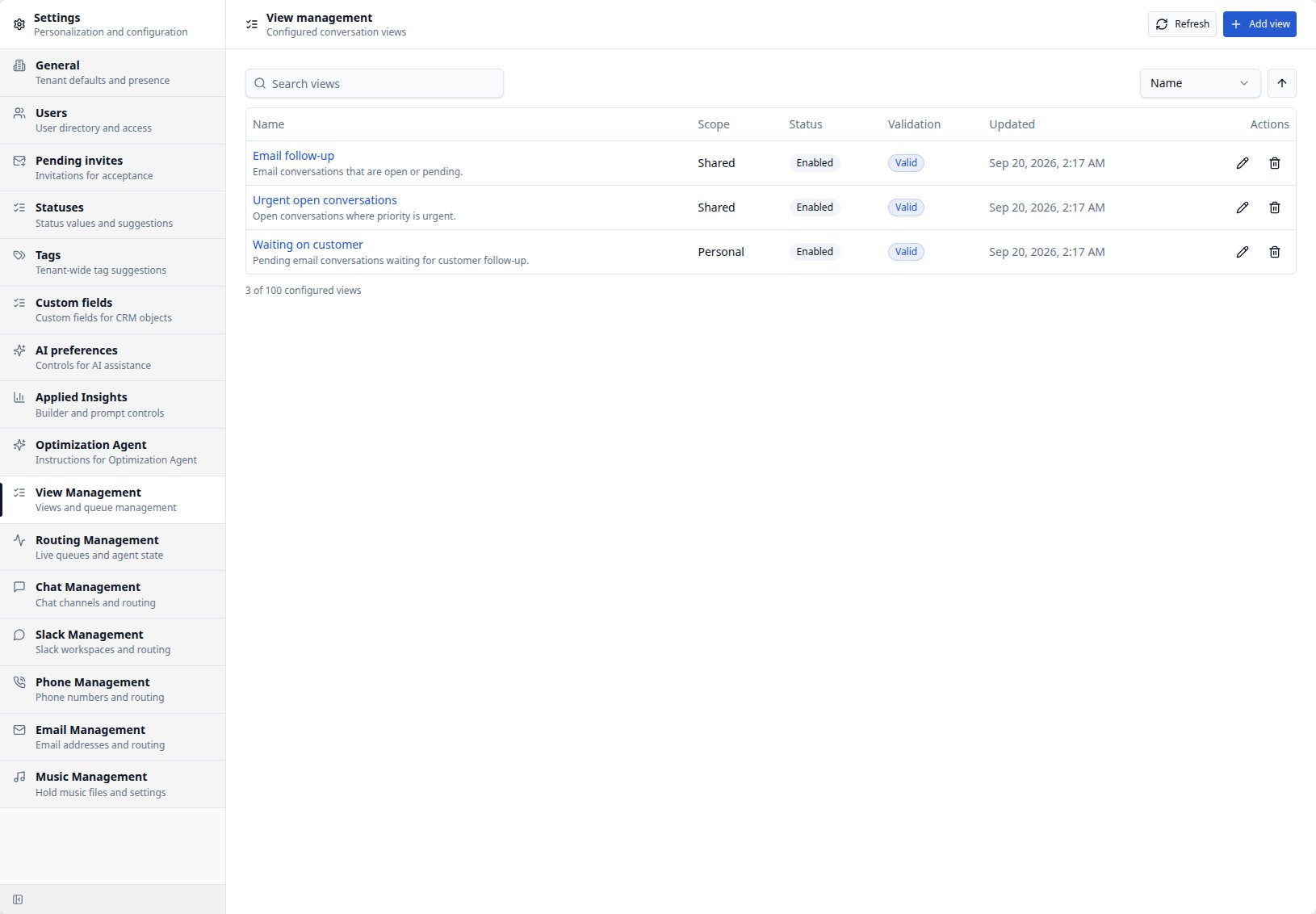
View management lists configured Views and provides Add view and per-View edit actions.
Configure the Edit View dialog
The New view and Edit view dialogs use the same editor. You can configure everything manually, use a description to generate the criteria, or combine both approaches.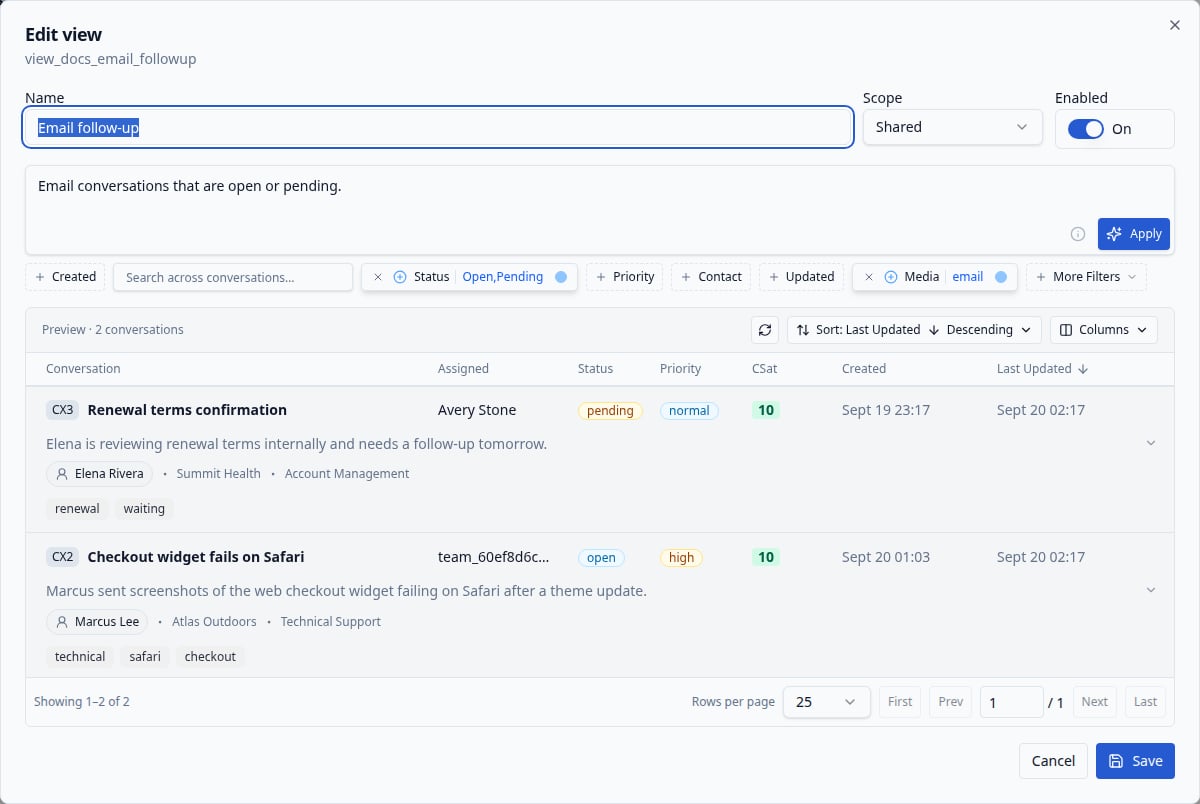
The editor combines the saved description, filters, and an automatic preview with its own Sort and Columns controls.
1. Set the name, scope, and enabled state
- Name: give the queue a clear purpose, such as “Open work needing follow-up”. A name is required to save.
- Scope: choose Personal for your own queue or Shared for a common queue. Personal-only entry points keep the scope Personal and do not show this selector.
- Enabled: keep it On to make the View available in the conversation workspace. Turn it Off to retain its definition while removing it from the normal list.
2. Describe the conversations and apply the request
Enter the purpose in Describe the conversations you want to see…. This three-row text area also holds the View’s saved description; there is no separate Description field. For example:Open conversations created in the past week and not updated in the last hour. Show Conversation, Assigned, Priority and Last Updated. Sort by Last Updated, oldest first.Select Apply to generate filters and the explicitly requested columns and sort. Review the resulting controls and preview. An explanation appears above the input for five seconds; the info icon beside Apply opens it again. Typing a description does not generate changes until you select Apply. Apply updates the draft and preview; Save persists the View. You can also type a description and configure the filters manually without using generation. Generation uses the same supported controls as Search. Unmentioned controls remain as currently configured. If the request is unsupported or ambiguous, refine the request or select the intended records manually. See natural-language search for examples and limits.