

Use voice and Softphone
Voice conversations use the same conversation workspace as chat and email. When a conversation has active realtime media, CXP shows a Realtime media panel in the right rail. The Softphone is hidden until your browser joins the voice room. Once joining starts, the global conversation center in the top bar shows the browser-owned call. The selected conversation shows contextual call controls inline, while the global center keeps the same call available as you move between conversations and other CXP pages.Prerequisites
Before using voice:- Your browser has microphone permission when joining a call.
- You are assigned to or otherwise authorized to join the conversation.
- The conversation has an active joinable voice session.
- Your network allows the configured voice media connection.
Join a voice session
Open the conversation and use Join Call in the lower-right action area of the Realtime media panel, where Disconnect appears after connection. The panel shows the Contact and current Handler. Chat and Voice icons beside each participant show which active media are connected; focus or hover an icon for its text status. Before connection, the panel is the only voice-control surface and an unconnected Softphone is not displayed. For an eligible combined Chat + voice widget assignment, accepting the assignment automatically joins the current single-room voice session. CXP does not join an ended or stale room. Other voice flows continue to show the explicit Softphone join action when required. If that browser connection fails after acceptance, the conversation remains assigned to you and CXP reports the voice failure separately. Use Join Call to retry. Before joining, CXP verifies the current conversation state. If you already participate in another active voice call, the request is rejected and the panel refreshes so you can try again after leaving the other call.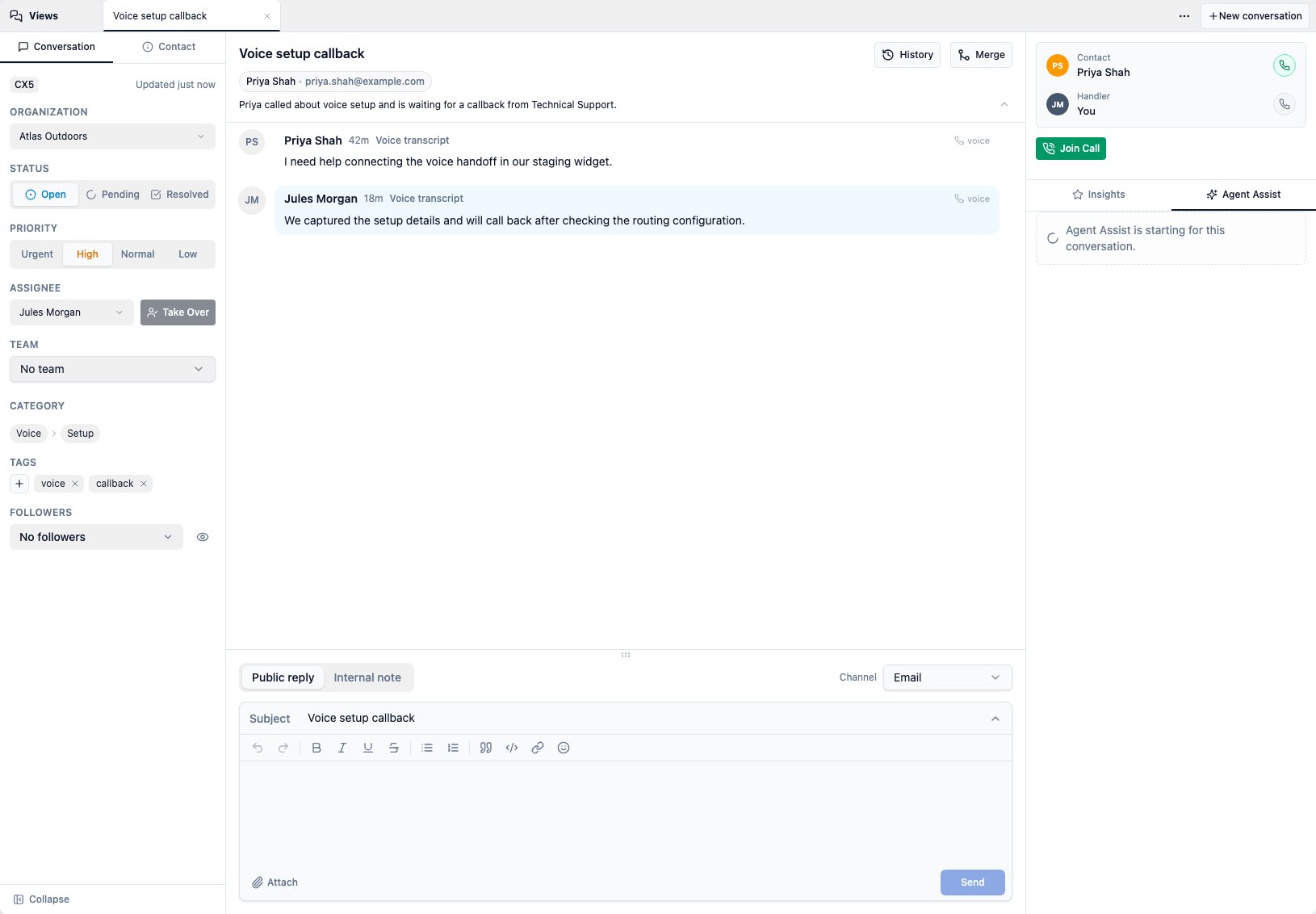
In-call controls
While you are viewing the call’s conversation, use the inline controls in Realtime media to:- Mute or unmute yourself.
- Hold or resume when supported.
- Disconnect the active realtime media you handle.
Voice transcript and recordings
Voice activity can appear in the conversation timeline as transcript rows and call recording entries. Transcript rows help agents follow context during and after the call. When recording playback is available, use it for review and quality checks according to your tenant policies.Handle chat and voice together
When the same conversation has active Chat and Voice interactions, the Realtime media panel shows both icons on the relevant participants. Use its single Disconnect action to end Chat and leave the local voice session you handle. The two effects settle independently. If one fails, CXP reports the failed medium and refreshes the panel without hiding the successful result.AI and human handoff
An AI Assistant answers each new voice interaction first, gathers context, and can hand off to a human when needed. A handoff completed for an earlier chat or call does not suppress the handoff tools for the new interaction. During handoff, CXP keeps the conversation as the source of truth so the agent sees customer context, transcript information, and AI summary data in the workspace.Troubleshooting
If you cannot join:- Confirm the conversation still has an active voice session.
- Confirm you are assigned to or authorized for the conversation.
- Leave any other active voice call before retrying Join Call.
- Check browser microphone permissions.
- Refresh the conversation if the call state changed recently.
- Ask an administrator to confirm phone and routing configuration.